
It used to be science fiction to think that an invisible digital stylist might one day influence your wardrobe choices. It’s a more fashionable reality these days. Fashion, which is inquisitive and constantly changing, has looked to artificial intelligence for both inspiration and innovation. From your shopping cart habits to your Instagram saves, algorithms are subtly learning your preferences and building digital profiles that are detailed enough to determine when you’re ready to move from jeans to tailored pants.
Algorithms now examine fashion trends in the same way that meteorologists forecast weather patterns thanks to the use of enormous datasets. Heuritech, a Paris-based company that works with fashion behemoths like Prada and Skims, searches Pinterest pins, TikTok trends, and runway shows for early warning signs. Notably, their models foresaw the arrival of minimalist flat sandals, yellow hues, and dotted prints during fashion weeks. These are calculations, not random events.
| Feature | Description |
|---|---|
| Trend Prediction | AI scans millions of images and signals to forecast fashion patterns |
| Personalized Styling | Apps recommend outfits based on your body, taste, and digital habits |
| Virtual Try-Ons | Simulates real-life fit using your image, size, and motion data |
| Smart Inventory Planning | Prevents overproduction by accurately forecasting demand |
| Designer Collaboration | Used by brands like Prada and Hilfiger to co-create with AI systems |
| Sustainable Sourcing | Tools analyze impact of raw materials before production begins |
| Micro-Trend Discovery | Detects niche movements early, from TikTok virality to regional shifts |
| Sentiment Analysis | Gauges fashion mood by decoding influencer and shopper content |
| Digital-Only Collections | Entire lines are now launched in virtual fashion shows and avatars |
| Adaptive Fit Technology | AI helps brands develop more inclusive, accurate sizing for real bodies |
AI’s capacity for prediction has simplified processes and freed up Amy Sullivan’s creative energy at Stitch Fix. She pointed out that “we can visualize clothing on digital avatars within minutes, instead of waiting weeks for samples from overseas.” In response to a straightforward query, AI generated simulations that ultimately resulted in the production of blue stripes. This eliminated guesswork, time, and expense.
Companies like Tommy Hilfiger have significantly enhanced their design pipeline by forming strategic alliances with AI developers. AI finds what will appeal to customers by analyzing thousands of street style photos and past runway data. It enhances human creativity rather than replaces it. Whether an oversized blazer should be sequin-trimmed or made from recycled wool is still up to the designers.
Social media has greatly accelerated trend cycles over the last ten years. Because of TikTok trends that are boosted by algorithmic nudges, a dress that was spotted on Kylie Jenner today may sell out by tomorrow. Francesca Muston of WGSN stressed that AI assists brands in identifying which of these viral trends have the potential to be profitable. She clarified that “commerciality and entertainment are two different things.”
AI steers clear of the pitfalls of creating unpopular products by identifying which trends are attracting attention and which actually lead to sales. As a result, the rate of deadstock inventory is greatly decreased, increasing fashion’s efficiency and ability to meet demand.
The sustainability potential of this change is what makes it so novel. Deciphering which raw materials have the highest environmental cost was the goal of Stella McCartney’s partnership with Google’s AI team. Before a single stitch is made, designers can make morally sound choices by combining this data. Fashion is becoming cleaner as well as smarter thanks to this data-first mentality.
More and more fashion brands that only sell online have surfaced in recent years, with collections that never come into contact with fabric. For instance, The Fabricant sold a virtual dress—an ensemble seen only in digital photographs—for almost $10,000. These patterns demonstrate how fashion has changed from being a product to an experience. In addition to creating the design, AI makes sure it complements the user’s digital identity.
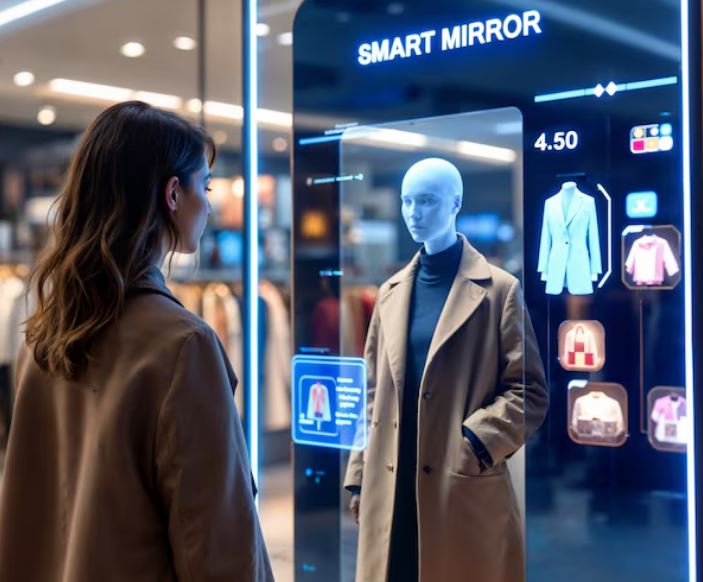
Customers now enjoy a remarkably similar benefit that was previously reserved for celebrities: custom styling, as personal style becomes increasingly algorithm-guided. Virtual assistants such as Style DNA and Smart Mirrors are incredibly effective and reasonably priced. They look through your existing wardrobe, suggest outfits, and even recommend new pieces based on your preferences and schedule. Your AI stylist is always available, whether it’s for a Zoom meeting or a date night.
There are wider cultural ramifications to this change. Editors, purchasers, and luxury houses were the main sources of fashion taste for many generations. These days, the crowd is decentralized and digital. Style authority has become more diverse and fragmented as AI amplifies microtrends. In less than a day, a trend that originates in Seoul and spreads to Stockholm due to popular preference rather than an elite decree. Despite being data-driven, fashion has become more democratic.
Meanwhile, it’s rumored that celebrities like Zendaya, who is renowned for her daring fashion choices, use AI tools to pre-visualize their red carpet options. Although stylists maintain control, they are assisted by platforms that can replicate looks in different lighting conditions and body positions—tools that significantly increase the accuracy of planning for appearances under pressure.
Naturally, concerns about identity, taste, and agency surface in the context of this technological revolution. Are we being picked for what we wear, or are we picking what we wear? How we interact will determine the solution. AI can help you, not guide you, if it recognizes your preference for neutrals or your love of layered textures. It’s important to strike a delicate balance between influence and inspiration.
At the core of it all, however, is human intuition. AI is capable of tracking color schemes and silhouettes, but it is unable to simulate the sensation of putting on an article of clothing that fully captures your individuality. That is still human territory. That intuitive spark is not lost, but rather is enlightened as fashion increasingly works with machines.